City guide · Japan
Kyoto
A thousand temples, geisha lanes, and perfect matcha
March–May & October–November
Japanese Yen (JPY)
Japanese
Asia
The guides
The best of Kyoto, by category
Kyoto was Japan's imperial capital for over a thousand years, and its 1,600 Buddhist temples, hundreds of Shinto shrines, and 17 UNESCO sites make it the country's cultural vault. Geiko still slip between Gion teahouses while monks rake gravel gardens at dawn — yet some of Japan's best coffee and cocktails hide in its machiya townhouses.
The shortlist
If you only have time for the best
The single highest-rated picks across every category in Kyoto.
Hotels
See all 6- 1
The Ritz-Carlton, Kyoto
Kamogawa riverside, Nakagyo
4.7★2,000+ reviews - 2
Park Hyatt Kyoto
Higashiyama
4.6★1,000+ reviews - 3
Four Seasons Hotel Kyoto
Higashiyama
4.6★2,000+ reviews
Restaurants
See all 6- 1
Kikunoi Honten
Higashiyama
4.6★1,000+ reviews - 2
Hyotei
Nanzenji
4.5★1,000+ reviews - 3
Izuju
Gion
4.5★1,000+ reviews
Bars
See all 6- 1
L'Escamoteur
Kiyamachi
4.6★2,000+ reviews - 2
Bee's Knees
Kiyamachi
4.6★1,500+ reviews - 3
Rocking Chair
Shimogyo
4.6★1,000+ reviews
Attractions
See all 6- 1
Fushimi Inari Taisha
Fushimi
4.6★50,000+ reviews
- 2
Kinkaku-ji
Kita
4.5★50,000+ reviews
- 3
Kiyomizu-dera
Higashiyama
4.5★50,000+ reviews
Where to base yourself
Kyoto neighborhoods, decoded
Pick your area first — it shapes everything else about the trip.
Gion & Southern Higashiyama
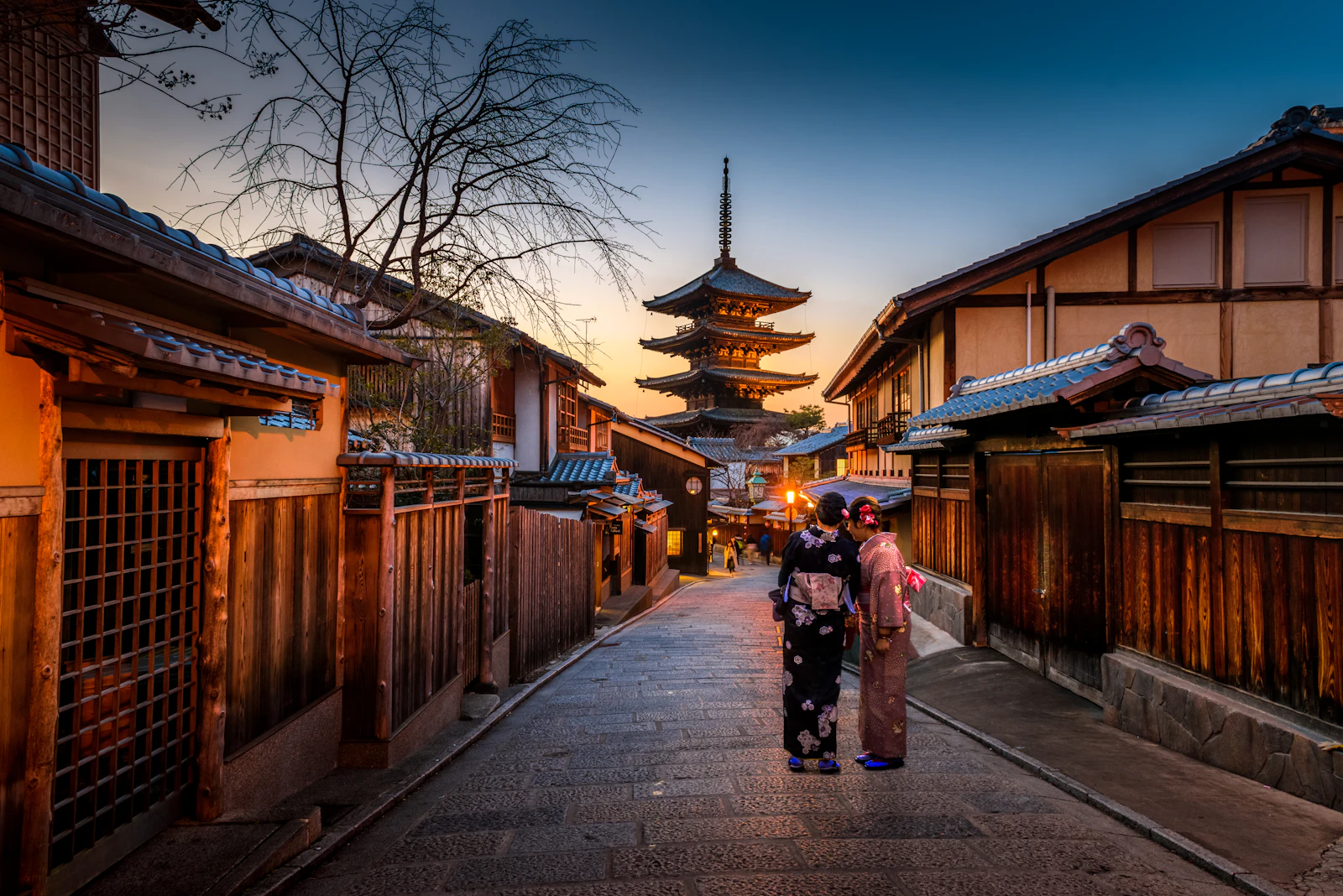
Teahouses, temples, twilight lanesThe preserved east bank: the stone lanes up to Kiyomizu-dera, Yasaka Shrine, and the geisha quarter along Hanamikoji. Evening, after the day-trippers leave, is its truest hour.
Arashiyama
River gorge and bambooWestern Kyoto's scenic district along the Katsura River: the bamboo grove, Tenryu-ji, the monkey park, and Togetsukyo Bridge backed by maple mountains. Magical early and late, mobbed at midday.
Downtown (Nakagyo)
Machiya shops and foodKyoto's commercial heart around Nishiki Market, the Teramachi arcades, and Pontocho alley, where 400-year-old knife shops neighbor third-wave coffee. The most practical base in the city.
Northern Higashiyama
Museums, canals, quiet templesThe greener stretch from Heian Shrine's giant torii past Nanzen-ji's brick aqueduct to the Philosopher's Path. Kyoto's museum district and its best cherry-blossom walk.
Beyond the city
Day trips worth the ride
Nara
45 min by Kintetsu expressJapan's first permanent capital: bowing deer, Todai-ji's Great Buddha, and the lantern-lined forest paths of Kasuga Taisha, all walkable from the station.
Uji
20 min by JR Nara LineJapan's green-tea capital, home to Byodo-in — the temple on the 10-yen coin — and riverside teahouses whisking the country's finest matcha.
Kurama & Kibune
45 min by Eizan RailwayMountain villages linked by a forested pilgrim trail over Kurama-dera temple; in summer, Kibune's restaurants set kawadoko dining platforms directly over the stream.
Eat like a local
What to order in Kyoto
Kaiseki
Kyoto's multi-course haute cuisine of exquisitely seasonal small dishes, born from tea-ceremony meals.
Try it at: Kikunoi Honten, Higashiyama
Yudofu
Silken tofu simmered in kombu broth — Zen temple food elevated to a delicacy in the gardens around Nanzen-ji.
Try it at: Okutan, Nanzenji
Matcha parfait
Layers of Uji matcha ice cream, jelly, and warabi mochi — the dessert all of Kyoto queues for.
Try it at: Tsujiri, Gion
Saba-zushi
Cured mackerel pressed onto sushi rice and wrapped in kombu, from the era fish traveled the 'mackerel highway' from the Sea of Japan.
Try it at: Izuju, Gion
Good to know
Kyoto essentials, answered
Three full days minimum: one for Gion and eastern Higashiyama, one for Arashiyama and the Golden Pavilion, and one for Fushimi Inari plus the downtown markets. Add a fourth for Nara or Uji — both under 50 minutes away.


